
Welcome to the breathtaking red cliffs and deep canyons of Southern Utah. Exploring this iconic landscape is a dream for many travelers, but success requires a bit of preparation.
Understanding the local logistics is essential for a smooth visit. Before you arrive, you should familiarize yourself with the mandatory shuttle system that keeps the canyon accessible for everyone.

Balancing popular adventures with efficient travel is the secret to a perfect trip. Whether you are chasing sunrise views or seeking challenging trails, knowing the best things to do in zion national park will help you maximize your time.
We have curated a list of seven unforgettable experiences that define this majestic destination. Let’s dive into how you can make the most of your upcoming desert adventure.
Key Takeaways
- Master the shuttle system to navigate the canyon floor efficiently.
- Prioritize early morning starts to beat the crowds and heat.
- Research trail difficulty levels before committing to long hikes.
- Pack plenty of water and snacks for your daily excursions.
- Respect the fragile desert ecosystem by staying on marked paths.
- Check current weather conditions for potential flash flood warnings.
Mastering the Zion Canyon Shuttle System
Planning your visit to Zion starts with mastering the park’s internal transit network. Because private vehicles are restricted in the main canyon during peak seasons, the shuttle becomes your primary mode of transportation. Understanding how this system works will save you significant time and stress during your adventure.
Understanding Shuttle Seasons and Schedules
The shuttle operates on a seasonal basis to manage high visitor volumes. During the busy months, typically from March through November, the service runs daily to ensure everyone can access the trailheads.
It is important to check the official park website before you arrive. Schedules can change based on weather conditions or maintenance needs. Always verify the first and last shuttle times to avoid being stranded at a remote stop after sunset.
Tips for Avoiding Long Wait Times
Long queues at the visitor center are common during mid-morning hours. To beat the crowds, you should aim to arrive at the park entrance before 8:00 AM. Early birds often enjoy a much smoother boarding process and quieter trails.
If you cannot arrive early, consider these strategies to minimize your wait:
- Visit during the middle of the week rather than on weekends.
- Travel during the shoulder seasons when visitor numbers are lower.
- Use the shuttle during off-peak hours, such as late afternoon, when many hikers are returning.
Parking Strategies Outside the Park
Parking inside the park fills up very quickly, often before the sun is fully up. Many visitors find that parking in the town of Springdale is a much more reliable option. The town offers a dedicated shuttle system that connects directly to the park entrance.
When choosing a parking spot in Springdale, keep these tips in mind:
- Look for designated public parking lots to avoid fines.
- Check if your hotel offers a shuttle or parking pass for guests.
- Be prepared to walk a short distance to the nearest shuttle stop.
By utilizing the Springdale transit options, you can transition into the park’s internal network with ease. Planning your parking in advance allows you to focus entirely on the breathtaking scenery waiting for you inside the canyon.
Conquering the Best Hiking Trails in Zion National Park
If you are looking for the ultimate outdoor adventure, the hiking trails in Zion National Park are truly unmatched. This iconic destination features a diverse landscape that caters to both adrenaline seekers and those who prefer a more relaxed pace. Choosing the right path depends on your physical ability and your comfort level with heights or water.

The Thrill of Angels Landing
Angels Landing is arguably the most famous of all hiking trails in Zion National Park. This challenging trek takes you along a narrow ridge with steep drop-offs on both sides, offering breathtaking panoramic views of the canyon floor. Because of its immense popularity, the National Park Service now requires a permit to access the final chain-assisted section.
You must apply for this permit through a lottery system well in advance of your trip. Safety is paramount when attempting this climb, so ensure you are comfortable with heights before heading out. The reward for your effort is a perspective of the park that few other locations can provide.
Walking Through the Narrows
For a completely different experience, consider trekking through The Narrows. This unique route involves walking directly through the Virgin River, where the canyon walls soar thousands of feet above you. It is one of the most memorable hiking trails in Zion National Park for those who enjoy getting their feet wet.
Proper gear is essential for a successful trip, including sturdy water shoes and a wooden hiking staff for stability. Always check the weather forecast for flash flood warnings before entering the canyon. Preparation is the key to enjoying this watery wonderland safely.
Family-Friendly Hikes for All Skill Levels
If you are traveling with children or simply want a leisurely stroll, Zion offers several accessible paths. These family-friendly hiking trails in Zion National Park provide stunning canyon views without the need for strenuous climbing. The Riverside Walk is a perfect example, offering a paved, relatively flat path that leads right to the entrance of The Narrows.
Another excellent option is the Lower Emerald Pool Trail, which features lush vegetation and beautiful waterfalls. These paths allow everyone in your group to appreciate the majestic beauty of the park at their own pace. No matter your skill level, you will find a trail that makes your visit to Utah unforgettable.
Essential Things to Do in Zion National Park for Sightseers
You can experience the majesty of Zion National Park without ever stepping onto a trail. While many visitors flock to the famous paths, there are plenty of things to do in Zion National Park that cater to those who prefer a more relaxed pace. Exploring the park by vehicle allows you to witness the dramatic scale of the canyon walls from the comfort of your seat.

Driving the Zion-Mount Carmel Highway
One of the most rewarding scenic drives in Zion National Park is the Zion-Mount Carmel Highway. This historic road winds through the eastern side of the park, offering a spectacular journey through tunnels and switchbacks. As you drive, you will notice the landscape shift from lush canyon floors to rugged, high-desert terrain.
The route is famous for its engineering marvels, including the mile-long Zion-Mount Carmel Tunnel. Keep in mind that large vehicles may require special permits or traffic control to pass through safely. This drive is truly a highlight for anyone looking to capture the essence of the park’s geology.
Stopping at the Great Arch and Checkerboard Mesa
As you navigate the highway, several pull-offs provide perfect opportunities to stretch your legs and admire the scenery. The Great Arch is a massive natural formation that stands out against the sheer cliff faces. It is a must-see landmark that showcases the power of erosion over millions of years.
Further along the road, you will encounter the unique textures of Checkerboard Mesa. This geological wonder features a distinct cross-hatched pattern carved into the sandstone by wind and rain. It is a favorite spot for travelers to stop and take photos of the park’s diverse rock formations.
Best Viewpoints for Panoramic Photography
Finding the best viewpoints in Zion National Park is simple if you know where to look. These locations offer sweeping vistas that are perfect for capturing the scale of the landscape. Consider adding these stops to your itinerary:
- Canyon Overlook Trailhead: A short walk leads to a stunning view of the lower canyon.
- Mount Carmel Tunnel East Entrance: Provides a dramatic frame for the surrounding peaks.
- Checkerboard Mesa Viewpoint: Offers an unobstructed look at the unique sandstone patterns.
Photography enthusiasts will find that the lighting changes dramatically throughout the day. Early morning and late afternoon provide the softest light, which highlights the deep reds and oranges of the canyon walls. Planning your stops around these times will ensure you get the most impressive photos of your trip.
Camping in Zion National Park and Lodging Options
From sleeping under the stars to enjoying modern amenities, Zion provides a variety of ways to stay. Finding the right home base is a critical component of your itinerary, as it dictates how you access the park’s most famous trails. Whether you are interested in camping in Zion National Park or prefer a hotel room, planning ahead is essential.
Comparing Watchman and South Campgrounds
The park features two primary sites for those who love the outdoors. The Watchman Campground is open year-round and offers electrical hookups, making it a popular choice for RV travelers. In contrast, the South Campground is often favored for its proximity to the main canyon entrance and the Virgin River.
Both locations require reservations well in advance, especially during the busy spring and fall seasons. Securing a spot for camping in Zion National Park can be competitive, so check the official booking portal months before your arrival. These sites provide a unique opportunity to wake up surrounded by towering red cliffs.
Backcountry Camping Permits and Regulations
For the truly adventurous, the wilderness areas offer a more secluded experience. You must obtain a backcountry permit for any overnight stay outside of designated campgrounds. These permits help the park manage human impact and ensure that visitors remain safe in remote terrain.
Regulations are strict regarding waste disposal and fire safety to protect the fragile desert ecosystem. Always review the current Leave No Trace principles before heading into the backcountry. Planning your route and checking weather conditions are mandatory steps for a successful wilderness trip.
Staying at Zion Lodge vs. Springdale Hotels
If you prefer a roof over your head, you have two distinct paths. The historic Zion Lodge is located directly inside the park, offering unmatched convenience for early morning hikers. Staying here allows you to step out of your room and immediately access the shuttle system.
Alternatively, the gateway town of Springdale provides a wide range of hotels, restaurants, and shops. While you will need to commute into the park, the diverse amenities and dining options often make it a more comfortable choice for families. Both options offer a great way to experience the beauty of the canyon after a long day of exploration.
Wildlife Viewing in Zion National Park
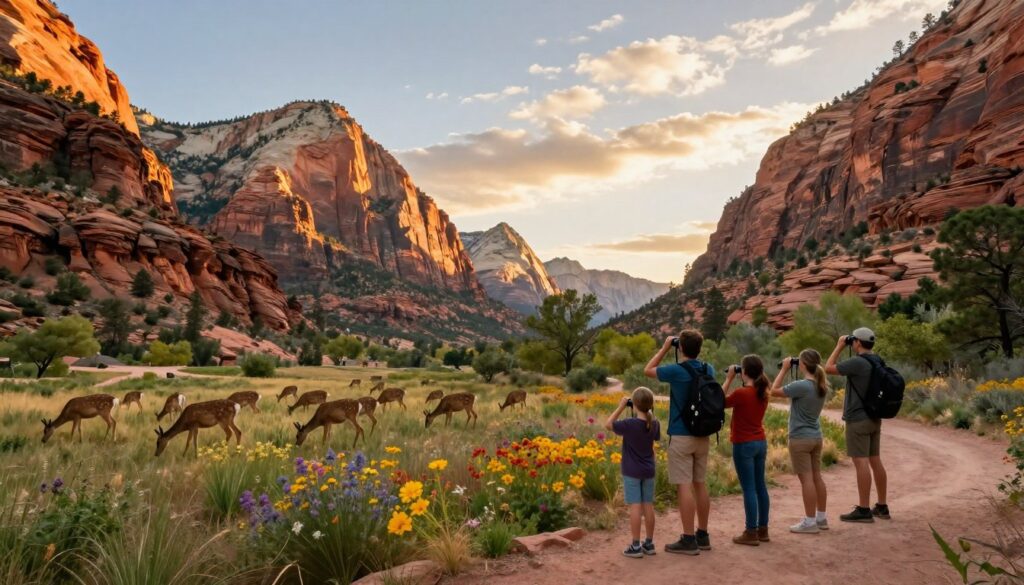
Wildlife viewing in Zion National Park is a highlight for many visitors seeking a connection with nature. The park’s diverse landscape creates a thriving home for various species that adapt to the rugged desert environment. Observing these animals in their natural surroundings provides a truly unforgettable experience.

Spotting Bighorn Sheep and Mule Deer
Desert bighorn sheep are perhaps the most iconic residents of the canyon. You can often spot them navigating the steep, rocky cliffs with remarkable agility. They frequently descend toward the canyon floor to graze near the Virgin River during the cooler parts of the day.
Mule deer are also common sights throughout the park, especially near the Zion Lodge and in the town of Springdale. These gentle creatures are accustomed to human presence, but it is vital to maintain a respectful distance. Watching them forage quietly among the cottonwood trees is a peaceful way to enjoy wildlife viewing in zion national park.
Birdwatching Opportunities for Rare Species
Zion serves as a sanctuary for a wide variety of avian life, making it a premier destination for bird enthusiasts. The park is famous for its population of the endangered California condor. These massive birds are often seen soaring high above the canyon walls on thermal currents.
Beyond the condors, you might spot peregrine falcons, golden eagles, and various colorful songbirds. Bringing a pair of high-quality binoculars will significantly enhance your chances of identifying these rare species. Early morning remains the best time to catch the most activity in the trees and along the riverbanks.
Safety Guidelines for Human-Wildlife Interaction
While the animals may appear calm, they are wild and unpredictable. Always keep a safe distance of at least 50 yards from large animals like bighorn sheep and deer. Never attempt to feed or approach any wildlife, as this disrupts their natural behavior and can be dangerous for both parties.
If you encounter an animal on a trail, stop and wait for it to move away before proceeding. Keeping the park wild ensures that future generations can continue to enjoy the beauty of these creatures. Responsible behavior is the cornerstone of ethical wildlife viewing in zion national park.
Rock Climbing in Zion National Park
Rock climbing in Zion National Park offers an unparalleled experience for those who love high-altitude thrills. The park is famous for its massive sandstone cliffs that rise thousands of feet above the canyon floor. It serves as a premier destination for experienced climbers looking to test their endurance and technical skills.
Big Wall Climbing Challenges
The vertical landscape here presents unique difficulties that differ from granite or limestone environments. Climbers must navigate soft sandstone, which requires specialized gear and a deep understanding of crack climbing techniques. Big wall climbing in this region is physically demanding and often requires multiple days to complete a single route.
“The mountains are calling and I must go.”
Best Seasons for Technical Climbs
Timing is everything when planning your trip for rock climbing in Zion National Park. You should aim for the spring or fall months to avoid the extreme heat of summer and the icy conditions of winter. During these shoulder seasons, the rock is more stable and the temperatures are ideal for long days on the wall.
| Season | Climbing Conditions | Temperature |
|---|---|---|
| Spring | Excellent | Mild |
| Summer | Difficult | Very Hot |
| Fall | Excellent | Cool/Pleasant |
| Winter | Challenging | Cold/Icy |
Permit Requirements for Overnight Climbs
If you plan to spend multiple nights on the canyon walls, you must secure a wilderness permit. These permits are essential for managing the impact on the park’s delicate environment. Always check the official park website to understand the latest regulations regarding overnight climbing and waste disposal requirements.
Proper preparation ensures that your experience with rock climbing in Zion National Park remains safe and enjoyable. By respecting the rules and the environment, you help preserve these iconic cliffs for future generations of adventurers.
Capturing the Landscape: Photography Spots in Zion National Park
Capturing the raw beauty of Zion requires patience, the right gear, and a keen eye for light. This park is a true paradise for those seeking the best photography spots in Zion National Park. You will find that the interplay of light and shadow on ancient rock creates endless artistic possibilities.
Golden Hour at the Watchman
The Watchman is perhaps the most iconic subject for any visitor. To capture that perfect golden hour glow, you should arrive well before sunset. The light hits the peak, turning the sandstone into a brilliant, fiery orange that contrasts beautifully with the darkening sky.
Using a tripod is essential during this time to ensure your images remain sharp as the light fades. Adjust your aperture to a higher f-stop to keep the entire landscape in focus. This technique helps you highlight the texture of the rock face against the soft background.
Reflections at the Virgin River
Finding the right spot along the Virgin River allows you to create stunning, symmetrical landscape shots. Look for calm sections of the water where the canyon walls mirror perfectly on the surface. These reflective moments are best captured in the early morning when the wind is low and the water is still.
You might consider using a circular polarizer to manage the glare on the water. This tool helps you decide how much of the riverbed you want to reveal versus the reflection of the sky. Experimenting with your shutter speed can also create a silky, ethereal effect on the flowing water.
Capturing the Colors of the Canyon Walls
The canyon walls shift in color throughout the day, moving from deep reds to soft pinks and purples. To capture these vibrant hues, you should shoot in RAW format to retain the most data for post-processing. Adjusting your white balance can help you emphasize the warmth of the stone during the late afternoon.
Pay close attention to the shadows, as they provide depth and scale to your compositions. Using a lens hood will prevent unwanted lens flare when shooting toward the sun. Remember that the best photography spots in Zion National Park often require a bit of hiking to reach the perfect vantage point.
| Subject | Best Time | Key Technique |
|---|---|---|
| The Watchman | Sunset | Use a tripod |
| Virgin River | Early Morning | Polarizing filter |
| Canyon Walls | Mid-Day | RAW format |
Seasonal Travel Tips for Your Utah Adventure
Whether you are chasing the summer sun or seeking quiet trails, timing is everything in Zion. The park experiences extreme temperature swings throughout the year, which can significantly impact your daily plans. Understanding these patterns ensures that your visit remains both comfortable and safe.
Visiting During the Peak Summer Heat
Summer in Utah brings intense heat, often pushing temperatures well above 100 degrees Fahrenheit. To stay safe, you should plan your most strenuous hikes for the early morning hours or late evening. Always carry more water than you think you need, as the dry desert air causes rapid dehydration.
Seeking shade is vital during the midday sun. Many visitors find relief by exploring the cooler, shaded areas of the canyon or taking advantage of the park’s shuttle system to move between trailheads. Remember that sun protection, including hats and high-SPF sunscreen, is non-negotiable during these months.
The Benefits of Off-Season Exploration
Visiting during the shoulder seasons, such as spring or late autumn, offers a much more peaceful experience. You will encounter significantly fewer crowds, allowing for a more intimate connection with the towering sandstone cliffs. The temperatures are generally mild, making it the perfect time for long-distance trekking.
Winter provides a unique, quiet beauty that many travelers overlook. While some higher-elevation trails may be closed due to snow, the main canyon remains accessible and serene. Embracing the off-season often results in better lodging availability and a more relaxed pace for your entire trip.
Weather Preparedness and Flash Flood Safety
Flash floods are a serious reality in Zion, especially during the monsoon season. These events can occur with little warning, turning dry riverbeds into dangerous torrents within minutes. Before entering any slot canyon, you must check the latest weather reports at the visitor center.
If there is any chance of rain in the forecast, it is best to avoid low-lying areas entirely. Safety protocols dictate that you should never attempt to cross a flooded wash or canyon floor. Always prioritize your well-being by choosing higher ground if the weather turns unpredictable.
| Season | Temperature | Crowd Levels | Best Activity |
|---|---|---|---|
| Spring | Mild | Moderate | Wildflower Hikes |
| Summer | Hot | High | River Walking |
| Autumn | Cool | Moderate | Photography |
| Winter | Cold | Low | Scenic Drives |
Conclusion
Zion National Park offers a landscape that stays with you long after you leave. Your trip requires careful preparation to ensure you enjoy every moment among the towering red cliffs.
Mastering the shuttle system remains the best way to navigate the canyon floor with ease. Prioritizing safety during your hikes protects both your well-being and the fragile desert ecosystem. Always check current weather reports to avoid flash flood risks in narrow canyons.
Respecting the natural environment preserves these iconic views for future visitors. Pack out all trash and stay on marked trails to keep the wilderness pristine. Your commitment to responsible travel makes a real difference in maintaining the beauty of Utah.
Use this guide to build your itinerary and prepare for the adventure of a lifetime. We hope these insights help you create lasting memories in one of the most spectacular places on Earth. Share your favorite moments from the park with fellow travelers to inspire their own explorations.